The Science of Play: 3 Simple Games That Boost Preschool Brain Development

Every parent wants to give their child the best start in life. We read to them, select the right preschools, and buy educational toys. However, some of the most powerful brain-building tools are already sitting in your living room.
Recent neuroscience reveals that structured, guided play acts as a gym for a child's developing brain [1]. By introducing simple games with gentle rules, you help your under-5 child build crucial mental pathways while making them feel safe, capable, and deeply loved.
The Magic of Executive Function
When developmental psychologists talk about "smart" kids, they are rarely talking about flashcards or memorizing facts. Instead, they look at executive function.
Executive function is the brain's air traffic control system. It manages:
Working memory: Holding and using small pieces of information.
Mental flexibility: Switching gears when plans change.
Self-regulation: Resisting impulses and staying focused.
Research from the Harvard Center on the Developing Child shows that these skills do not just develop automatically [2]. They must be built through practice, and structured play is the absolute safest environment for a toddler to practice them.
3 Research-Backed Games to Try Today
1. The Red Light, Green Light Twist (Improves Self-Regulation)
How to play: Walk across the room on "Green Light" and freeze on "Red Light." Once they master this, reverse the rules: "Red" means go, and "Green" means freeze.
The Science: This forces the brain to inhibit a natural reflex (stopping when hearing "Red") and execute a non-automatic response. It directly trains the brain filters used to manage toddler tantrums.
2. The Multi-Step Toy Sort (Boosts Working Memory)
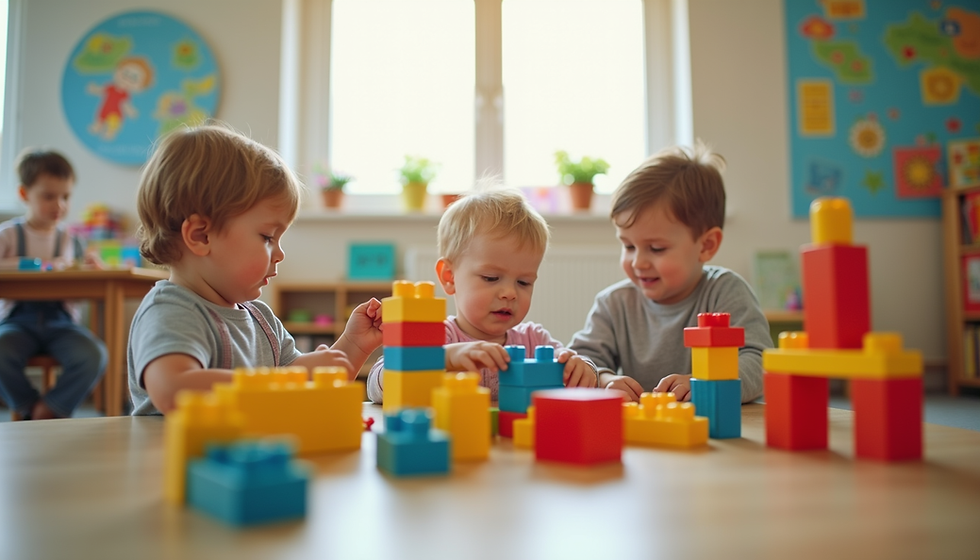
How to play: Gather a mix of colored blocks and toy animals. Give a structured, two-step instruction: "First, put all the blue items in this basket. Second, put all the animals in that basket."
The Science: Holding two distinct rules in mind while executing a task stretches their working memory capacity, laying the groundwork for following classroom instructions later in life.

Child playing with sorting toy
3. The Freeze Dance Challenge (Enhances Mental Flexibility)
How to play: Play music and dance. When the music stops, everyone must freeze in a specific shape, like a "frozen statue" or a "tiny ball."
The Science: Changing physical shapes rapidly based on changing environmental cues builds cognitive flexibility, helping toddlers adapt to transitions throughout their day.

Parental Reassurance: Keep It Joyful
You do not need to turn your home into a rigid classroom. Just 10 to 15 minutes of structured play a day makes a profound difference. The goal is connection, not perfection. When your child loses focus or breaks a rule, smile, gently remind them of the game's boundaries, and try again. You are not just building their brain; you are building their confidence.
References:

Comments